As we move through the second "cycle" of the school's 6-day rotating schedule, teachers' icebreakers are long gone, and we are digging into serious academics with our students at South. Some classes are reviewing prior learning to figure out what was thoroughly learned and what will need to be revisited to ensure students have a good foundation for the year's curriculum. Others are introducing new material or taking new, deeper looks at old topics. Regardless, there is a lot of material being covered in classes, and students may be feeling very stressed! They probably have more homework in the higher grade level and more independence in their studies, and they're still getting to know their new teachers' styles and expectations. Don't be surprised if your child needs some additional support at this time, even if they have been very independent in their schoolwork before, or if they haven't needed help in previous years.
CLASSROOM ROUTINES
Talk to your child about their homework and the classroom procedures for the first few weeks. It may be 5 minutes every day, or it may be 10 minutes a couple times a week, but ask them questions:
- Does the Math teacher assign homework? Do they tell it out loud, or is it written on the board somewhere?
- What happens when you walk into English class? Does everyone sit right down and get to work, or does the teacher wait until everyone's there to get started?
- In Science class, did they tell you when to expect a test or quiz back? Do they go over it, or are you supposed to do that on your own?
Note: You're asking your child for information and trusting their answer. You're asking follow-up questions to get to the right answer. You're not emailing the teacher to get the answer. Don't take the responsibility from your child; teach them how to meet their obligations.
GETTING ORGANIZED - HOMEWORK
Another key habit in middle school is writing down assignments daily. Set the expectation for your child that you want to be able to look in their assignment notebook and see what's due, when, and if there's anything coming up. If your student hasn't received a Student Agenda or loses theirs, they can purchase a Student Agenda book in the Main Office for $5. You can also use a standard notebook, a daily planner/calendar, or an online assignment notebook.
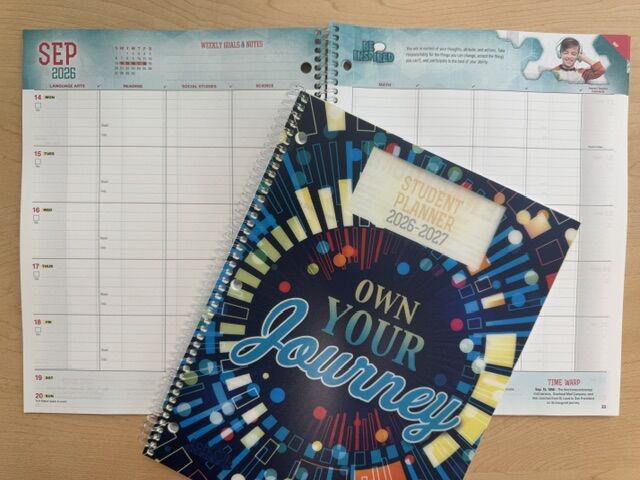
Assignment Notebook Pro Tips:
- Use a dedicated notebook that is only for writing down homework (don't rip a page out of whatever notebook is closest)
- Write your full course schedule out each day. At the end of the day, run down the list and if you've forgotten any classes, check the teacher's board before you go home—or go on Google Classroom, ask a classmate, etc.—to find out what you missed.
- If you don't have homework, write "none" for that class. That way, you know it's "no homework" and not that you accidentally forgot to write down something important.
- Take some time to plan out long-term assignments. To start, this might be as simple as teaching kids to write the day before an assignment is due (ex. the weekly Math challenge is due on Friday, but I need to write that reminder on Thursday), and to backfill daily reminders about upcoming deadlines.
- Best practice is to write when you have a test and then to put it in as a daily reminder for the days leading up to that. If you study for 5 minutes 3 days in a row, you'll get much more out of it than if you studied for 20 minutes just on the night before the test!
- If you use an agenda notebook, daily planner, etc. that is organized by date, go through the whole calendar year and enter the Day of the Cycle for each school day. An investment in time now will make it much easier to keep track of which classes you'll have on any given day!
PLANNING AHEAD - WHAT DO I NEED TO HAVE WITH ME?
Students are not allowed to carry backpacks into classrooms. This is a long-standing rule in the Student Handbook and over the decades is one of the hardest parts of the transition to middle school. There are safety concerns about carrying backpacks into classrooms (tripping hazards, unauthorized items in classes, distractions, etc.) but there is also the developmental necessity to build the skills of self-organization. Elementary students traditionally use classroom desks to store their items, and in middle school we use lockers. This system gives everyone a secure space to store items they don't need to use right now, so they can carry only those items they do need for learning. Being able to coordinate this is a learning process, and teachers are helping students gain the skills to:
- think ahead and decide what they need for need class
- plan the most convenient times in their schedule to go to their lockers
- know what to do if they find they're in class and need something they've left behind
SUPPORTING KIDS THROUGH FAILURES
Some kids will treat every mistake as a catastrophe, and some will act like it's no big deal and try to move on. Neither reaction is good or helpful. Talk to your child when they "fall down." What went wrong? What are you going to do differently next time so it won't happen again? Kids need to know that every day is a fresh start, but we need to learn from our mistakes. Talking is the easiest way to do this! Open-ended questions help them puzzle through solutions to their problems. Coaching them, focus on the future: What can you do differently next time?
SAFETY FIRST - PROTECTING YOUR PROPERTY
Students should have learned their locker combinations by the end of the second cycle. If they don't have it down already, tell your child to bring their lock (and combination) home over the weekend and practice it several times a day. By the end of the month, we will expect students to be using their locks and securing their lockers.
My student is struggling to carry their Chromebook with all their materials to class. What can we do to keep the technology safe?
Students may carry their chromebook/laptop/device in a protective sleeve (Search "laptop sleeve" online and you'll see what I'm talking about!) but it should only be large enough for the device, charger, and a mouse if they use one. Some students have found chromebook-sized tote bags; something open-topped and no bigger than a notebook is a fine option to keep all the odds and ends of technology at hand.
 If your child struggles with organization or needs additional help with the executive functioning demands of middle school, reach out to their Guidance Counselor. The school counselors have a vast toolbox of strategies to help kids get organized. If one approach doesn't work, we'll try another!
Comments
Post a Comment